

A moving estimate can feel like a bad magic trick. You ask three companies to price the same move, and somehow you get three completely different numbers, with no obvious reason one should trust any of them. The smart way to compare a moving estimate is not to chase the lowest price first, but to make sure each quote is pricing the same job.
What a Moving Estimate Actually Tells You
A moving estimate is a pricing forecast. That sounds obvious, but it matters because a forecast is not the same thing as a final bill. It is the company’s best pricing picture based on the details provided: what you are moving, where it is going, when it is happening, and how hard the job will be.
Here’s the thing: the number by itself tells you very little. A $900 quote is not better than a $1,200 quote if the cheaper one leaves out packing, travel time, stair fees, or your oversized sectional. Scope comes first. Price comes second.
A little jargon shows up fast when you start collecting quotes, so it helps to translate it into normal language. An estimate is the projected cost. A binding estimate means the price is locked in unless the job changes. A non-binding estimate is a best guess, and the final cost can go up based on actual weight, time, or services. Accessorial fees are the extra charges for things like stairs, long carries, elevators, storage, or shuttle service. It is just moving-industry language for “stuff that can quietly raise the bill.”
That is why a moving estimate should be treated as a comparison tool, not a promise. If you compare what is included before you compare the total, the quotes start making a lot more sense.
Start by Comparing the Same Move
Quotes only mean anything if every company is pricing the exact same move. Same date. Same addresses. Same number of rooms. Same inventory. Same access conditions. Same services.
If one company is quoting a two-bedroom condo with elevator access and basic loading, while another is quoting a two-bedroom condo plus packing, mattress bags, and a piano, those quotes are not really competing with each other. One just looks cheaper because less is included.
Keep the core details consistent every time you request a quote: move date, origin and destination, home size, box count, large furniture, stairs, elevator access, parking setup, specialty items, packing help, storage needs, and delivery window. If you are moving out of a beachside building or a tight downtown area near Sarasota’s busier streets, mention that upfront. Truck access can change the math in a hurry.
For shorter in-town moves, it also helps to know how local move pricing usually works, because hourly billing, minimums, and travel time can make two similar-looking quotes land very differently.
Build a simple apples-to-apples quote sheet
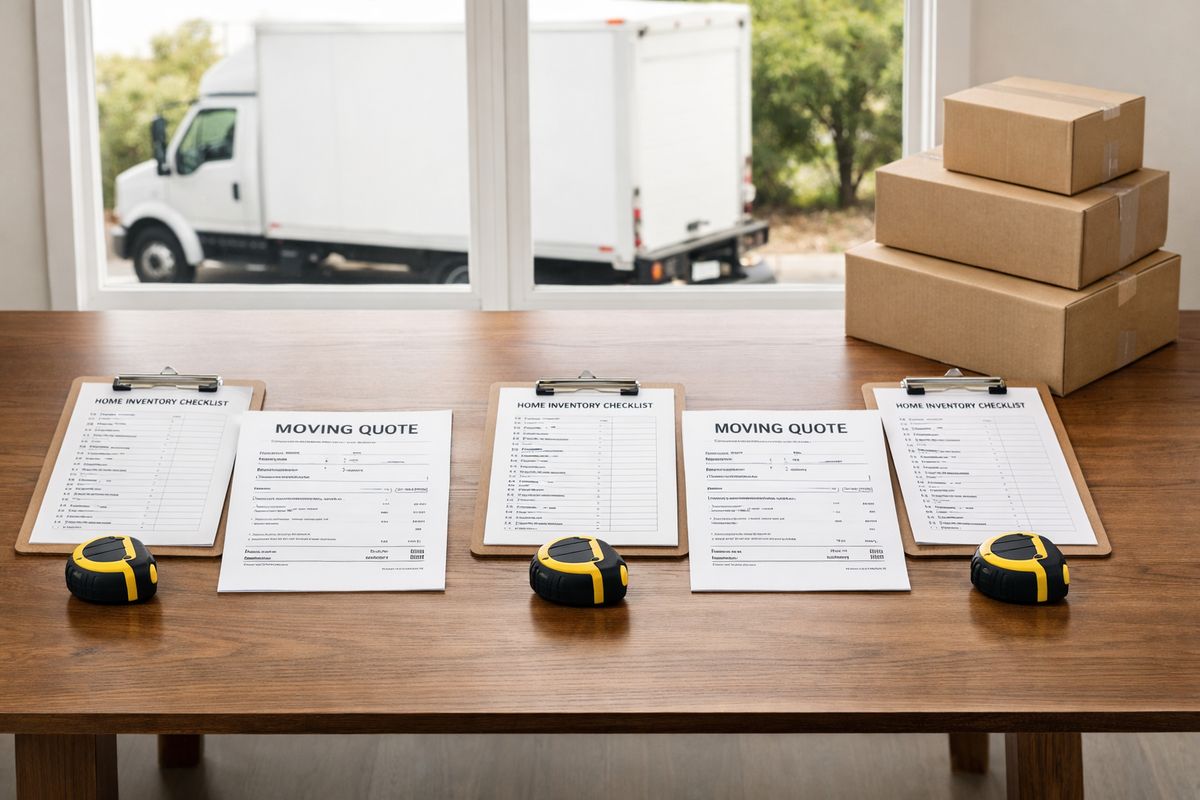
The easiest fix is a side-by-side quote sheet. Nothing fancy. A basic table or spreadsheet works fine, as long as every estimate is lined up in the same categories.
| Category | Quote A | Quote B | Quote C |
|---|---|---|---|
| Estimate type | |||
| Move date | |||
| Inventory included | |||
| Labor/crew | |||
| Truck charge | |||
| Travel time | |||
| Minimum hours | |||
| Packing included | |||
| Supplies included | |||
| Valuation coverage | |||
| Specialty item fees | |||
| Storage/shuttle fees | |||
| Deposit required | |||
| Payment terms | |||
| Possible extra fees |
Once you lay quotes out like this, the differences stop hiding. Suddenly the “cheapest” option has a smaller crew, no packing materials, and a three-hour minimum with travel billed separately. That is useful. And honestly, that is the whole point.
Why your inventory matters more than most people think
Undercounting is one of the fastest ways to get a misleading estimate. A quote built around “one couch, one bed, ten boxes” will fall apart if moving day shows up with a garage full of bins, a Peloton, patio furniture, and a dining table that comes apart into six pieces.
Inventory accuracy matters even more for long-distance and specialty moves, where pricing may depend on shipment weight, volume, or handling difficulty. Research suggests that a detailed inventory can get an estimate within 10 to 15 percent of actual cost, which is much better than guessing from memory.
A visual survey usually helps. That can be an in-home visit or a video walkthrough. It takes a few extra minutes, but it is a lot like measuring a room before buying a sofa. You can skip the step, but you may not like what happens next.
Know Which Pricing Model You’re Looking At
One big reason quotes vary is simple: not every move is priced the same way. Local, long-distance, and specialty jobs use different pricing models, and the numbers can look unrelated even when both estimates are legitimate.
Local moves: hourly rates, crew size, and minimums
Most local moves are billed by the hour. That usually means a rate for a certain crew size plus a truck, often with travel time and a minimum charge. Common pricing lands around $108 to $125 per hour for two movers and a truck, and many companies require a two- or three-hour minimum.
That matters for small jobs. A short studio move may still trigger the minimum, so the final total can be much higher than the time physically spent inside your home.
Crew size also changes the value of the quote. A lower hourly rate is not automatically better if the crew is too small to move efficiently. Two movers taking six hours may cost more than three movers finishing in four. The trick is to compare total expected labor, not just the hourly number.
Also check when the clock starts and stops. Some companies bill from the time the crew leaves the office. Some bill from arrival. Some include drive time both ways. Those details can turn a seemingly low quote into a frustrating surprise.
Long-distance moves: weight, mileage, and delivery windows
Long-distance and interstate moves usually work differently. Instead of simple hourly pricing, the estimate often reflects shipment weight, distance, and service level. Optional services, such as packing, storage, expedited delivery, or extra protection, can push the total higher.
That is why long-distance quotes often come as ranges instead of one exact number. Pricing depends on what the shipment actually weighs and what services are used. For cross-country moves, pricing often runs around $0.50 to $0.70 per pound, which is why inventory accuracy matters so much.
You may also see the word tariff. In plain English, that is the company’s pricing rulebook. It lays out what fees can be charged and under what conditions. It is not exciting reading, but it helps explain where those extra line items come from.
Specialty moves: pianos, antiques, safes, and fragile items
Specialty items rarely fit inside a standard quote without extra handling charges. A piano may need a larger crew and special equipment. An antique cabinet may need custom padding or crating. A gun safe may need floor protection, stair planning, or hoisting.
Those costs are not random. They reflect labor, risk, and equipment. If you have anything unusually heavy, awkward, fragile, or valuable, expect separate line items and ask for them in writing. If you want a deeper look at what counts as special handling, this guide on moves that need extra care helps clarify what to expect.

The 7 Parts of a Quote You Should Read Closely
This is the part that saves money. Most expensive moving surprises are not hidden in tiny print so much as buried in the parts people skim.
Estimate type: binding, non-binding, and not-to-exceed
A binding estimate means the quoted price is fixed, as long as the inventory and services do not change. A non-binding estimate is a projection, not a cap. A not-to-exceed estimate sets a maximum, but the final cost can go lower if the actual shipment is lighter or simpler than expected.
For interstate moves, this matters a lot. Federal guidance explains the three estimate types clearly, and the difference is not small. A binding quote gives budget certainty. A non-binding quote leaves more room for the final cost to rise. A not-to-exceed estimate is often the most buyer-friendly format because it protects against overpaying while still allowing the price to drop.
The catch is that any estimate can change if your move changes. Add fifty boxes after the survey, and the original number may no longer apply.
Included services versus add-ons
Read the included services line by line. Does the quote cover packing, unpacking, disassembly, reassembly, floor protection, mattress bags, TV boxing, appliance prep, or debris removal? Or are those priced separately?
Packing is where estimates can drift fast. One company may include a few wardrobe boxes and basic wrapping. Another may charge for every carton, roll of tape, and mattress cover. If you are trying to decide what is worth paying for, it helps to look at when extra packing help pays off before you book.
The same goes for storage. Temporary storage between homes, even for a few days, can trigger handling charges on both ends plus monthly storage fees.
Liability coverage and valuation
Coverage is one of the most misunderstood parts of a moving estimate. Released value protection is the basic option and is usually included at no extra charge, but it pays very little if something is damaged. Full-value protection costs more, but it offers much stronger reimbursement.
A simple example makes this real. If your 25-pound TV is covered only under released value protection, it could be reimbursed at just 60 cents per pound, which comes out to $15. That is not replacing much of anything.
So read the valuation section carefully. If you are moving high-value furniture, artwork, electronics, or family pieces you cannot easily replace, this part deserves attention.
Deposits, cancellation terms, and payment rules
A deposit is not automatically a problem. Some movers require one. The issue is how much, when it is due, whether it is refundable, and what happens if plans change.
Read the cancellation policy like you would a flight change policy. Is there a cutoff date for refunds? Is the deposit transferable to a new move date? What payment forms are accepted on moving day? If the estimate is vague here, slow down.
Pressure tactics are a bad sign. So are large upfront deposits, demands for cash only, or language that leaves cancellation terms foggy. A solid company should spell this out without making you chase the answer.
Hidden Fees That Can Sneak Up on You
This is where moving quotes get slippery. The base number may be honest, but small add-ons can quietly tack on hundreds of dollars.
Access fees: stairs, elevators, long carries, and parking headaches
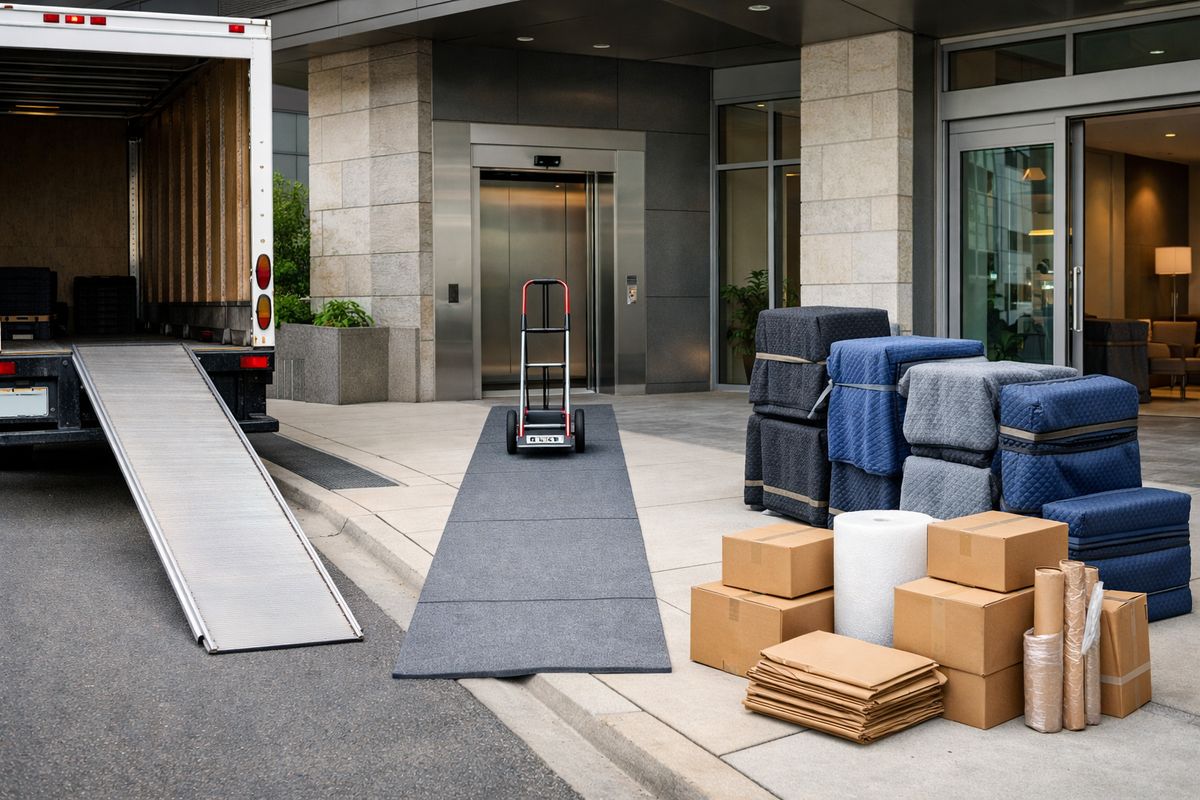
Accessorial charges are the classic example. Stairs, elevator reservations, long carries from the truck to your door, gate delays, and hard parking conditions can all show up as extra fees.
In Sarasota, this can get real around condo buildings, busy downtown blocks, and beachside properties where truck access is tight or loading zones are limited. If the moving truck cannot get close, extra labor time or a smaller shuttle vehicle may be needed. None of that is unusual, but it should be discussed before moving day.
Packing materials, bulky items, and last-minute changes
Materials add up faster than most people expect. Boxes, tape, shrink wrap, moving blankets, dish packs, wardrobe cartons, mattress bags, and TV boxes all cost money. So do items that were not on the original inventory.
Bulky furniture can also trigger separate charges, especially if it needs extra wrapping, disassembly, or multiple movers to handle safely. The same goes for treadmills, oversized sectionals, refrigerators, and anything that turns a normal carry into a puzzle. For unusually heavy pieces, it is smart to review what to ask about hard-to-move items before comparing quotes.
Fuel, tolls, storage, and shuttle fees
Transportation-related fees vary by move type. Local jobs may include a fuel surcharge or travel fee. Long-distance jobs may separate transportation charges, tolls, or storage-in-transit. A shuttle fee means a smaller truck is used because the main truck cannot reach your home directly.
This is one of the easiest places for charges to hide in plain sight. Research from multiple sources shows hidden costs can add a few hundred dollars to a moving bill, sometimes much more when storage or difficult access gets involved. Small line items matter.
What Affects the Price More Than You’d Expect
Price swings between quotes are normal. What matters is knowing what caused the swing.
Timing: season, weekday, and month
Timing changes price more than people expect. Summer is busier, weekends are busier, and end-of-month dates are busier because leases tend to line up there. When demand rises, prices rise with it.
Research consistently shows peak season can run 20 to 30 percent higher than quieter periods. Mid-week and mid-month dates usually give you better odds of a lower quote. Flexibility helps, even by a day or two.
Home size, distance, and how much stuff you’re moving
The more you move, the more you pay. That sounds basic, but the quote is usually reacting to volume, weight, labor time, and truck space all at once.
For local moves, rough benchmarks can help ground expectations. National data puts local moves anywhere from a few hundred dollars for a very small job to over $1,500 for larger homes, with many typical local moves landing around the low four figures. For long-distance moves, estimates often jump into the several-thousand-dollar range, especially once distance and full-service options are added. That is why a two-bedroom apartment and a four-bedroom house should never be compared casually, even if both are “moving across town.”
Decluttering before the estimate is one of the fastest ways to cut moving costs. Fewer things means less labor, less weight, fewer materials, and often a smaller truck need. It is one of the rare moving tips that is both simple and actually worth the effort.
Access and logistics at both locations
A mover is pricing the whole route, not just the drive. That includes stairs, elevator rules, parking distance, loading dock access, gates, neighborhood restrictions, building time windows, and the walking distance from truck to front door.
That is why accurate details matter on both ends. A smooth pickup does not help much if delivery means a fourth-floor walk-up with no loading zone and a half-block carry in August.
How to Spot a Quote That Looks Cheap for the Wrong Reasons
Cheap is not the problem. Unclear is the problem.
Red flags in the estimate itself
A weak quote usually looks vague. The inventory is incomplete. The estimate type is missing. Services are lumped together with no breakdown. Extra fees are mentioned only in broad language. The total looks unusually low with no explanation.
A real quote should be specific enough to compare. If you cannot tell what is included, you cannot tell whether it is a good deal. That is also why it helps to use a solid booking checklist when you review each estimate. It keeps the obvious questions from slipping through.
Red flags in the company’s process
The process matters as much as the number. If no walkthrough is offered, fee questions get brushed off, the call feels rushed, or you are pushed to book immediately, slow down.
For interstate moves especially, licensing and insurance are basic trust checks, not bonus features. Federal guidance requires written estimates for interstate moves and generally ties accuracy to a visual survey unless that requirement is waived. If a company wants your deposit before clearly explaining the quote, that is not efficiency. That is a warning.
A Smart Way to Compare 3 Moving Quotes
You do not need the perfect quote. You need the most trustworthy one for your move.
Step 1: Toss out any quote that isn’t detailed
Be decisive here. If the estimate does not clearly list the inventory, estimate type, included services, and likely fees, remove it from the running. A vague quote is not a bargain. It is homework you will end up paying for later.
Step 2: Compare total value, not just the base number
Now compare what you actually get. Was the survey thorough? Does the crew size make sense? Is valuation coverage clear? Are packing and supplies included? Is the scheduling window realistic? Did communication feel organized and direct?
Sometimes the middle quote is the best quote because it is the most accurate. In one survey, 52% of movers paid within $100 of their quote, which is a good reminder that solid estimates do exist when the inventory and process are handled well.
Step 3: Ask 5 questions before you book
Ask these directly, and get the answers in writing if possible:
- What could change this price?
- What extra fees are most commonly added?
- Is travel time included?
- What protection is included?
- What happens if the move date changes?
That short list does a lot of work. It reveals how transparent the company is, how carefully the estimate was built, and how likely your quote is to hold up once the truck arrives.
Budgeting for Your Move Without Getting Blindsided
Comparing estimates is only half the job. The next step is building a realistic budget around them.
What local and long-distance moves often cost
Broad price ranges are useful for a reality check, as long as you do not treat them like promises. Local moves often land somewhere between a few hundred dollars and the low thousands, depending on home size, crew, time, and access. Recent research puts local averages around $1,250 to $1,692, depending on source and move type. Long-distance moves commonly range from roughly $1,500 to well over $8,000, with national averages often around $4,000 to $5,000.
For Sarasota moves, access conditions, distance, season, and inventory can push your quote above or below those ranges. If you want a more local benchmark, it helps to review what people around Sarasota tend to pay so the estimate in front of you feels less abstract.
How to trim the quote without making moving day harder
The best savings are the ones that do not create chaos later. Declutter before the estimate. Move mid-week or mid-month if you can. Be upfront about stairs, parking, and elevator rules. Handle some packing yourself, but not all of it if time is already tight.
Selective packing works better than heroic packing. Books, linens, décor, and off-season clothes are easy candidates for DIY boxing. Fragile kitchenware, artwork, and anything awkward often make more sense to leave to professionals. The point is not to strip the service down to the studs. The point is to pay for the parts that actually help.
The Best Quote for Your Situation
The “best” estimate depends on the move itself.
Best for a small local move
For a studio, one-bedroom, or short local move, focus on hourly efficiency, minimum charges, and travel time. A higher hourly rate can still be the better deal if the crew is sized correctly and the company works fast. For small moves, minimums matter almost as much as the actual labor.
Best for a family or whole-house move
For larger homes, quote quality depends on inventory accuracy and realistic staffing. You want enough crew to keep the day moving, clear communication about packing support, and a written list of what is included. Larger moves punish vague estimates because there is simply more room for missed items and surprise charges.
Best for long-distance or interstate moves
For interstate moves, favor written estimates with clear estimate type, weight assumptions, delivery windows, valuation options, and fee explanations. Transparency matters more than charm here. Long-distance quotes can vary a lot for the same route, so the cleanest paperwork usually wins.
Best for specialty or high-value items
If your move includes a piano, antique furniture, artwork, a safe, or anything fragile and expensive, the right quote will mention custom handling, protection steps, and item-specific pricing. General moving experience is not enough. The estimate should show that the company noticed the risk and priced for it properly.
Your Quick Moving Estimate Checklist
A smart moving estimate comparison is pretty simple once you strip away the noise. Compare the same scope. Check the pricing model. Read the estimate type. Look for hidden fees. Confirm what is included. Ask direct questions before you sign anything.
Try one thing this week: gather three written quotes using the same inventory list, then compare them side by side. That one step will tell you more than any flashy sales pitch ever will.
Frequently Asked Questions
How accurate is a moving estimate?
A moving estimate is most accurate when it is based on a detailed inventory and a visual survey. Local estimates are usually more predictable because they are often tied to time and crew size. Long-distance estimates can vary more because weight, mileage, and added services affect the final total.
Is a binding estimate better than a non-binding estimate?
Usually, yes if you want budget certainty. A binding estimate locks in the quoted price unless your inventory or services change. A non-binding estimate can go up, which makes it riskier if the quote was built from incomplete information.
How many moving quotes should you get?
Three written quotes is a strong baseline. That gives you enough range to spot outliers, notice missing fees, and compare service levels without turning the process into a full-time job.
What should be included in a moving estimate?
A useful estimate should show the estimate type, inventory, crew or weight basis, truck or transportation charges, travel time, minimums, included services, valuation coverage, deposit terms, and likely add-on fees. If those details are missing, the quote is too vague to trust.
Why are moving quotes so different for the same move?
Quotes differ because companies may be pricing different inventory, different services, different crew sizes, or different fee structures. One estimate may include packing materials, travel time, or stair charges while another leaves those out. That is why comparing scope before price matters so much.
When should you get a moving estimate?
Start about six to eight weeks before your move, especially for summer dates, larger homes, or interstate moves. That gives you time to schedule walkthroughs, compare written quotes carefully, and avoid booking in a rush.