

Booking licensed and insured movers sounds simple until you realize those words can mean very different things on paper than they do in your head. A low quote can look great on Tuesday and turn into a stressful moving day by Friday, so it helps to know exactly what to check before you lock anything in.
What “Licensed and Insured Movers” Actually Means
Licensed and insured movers are moving companies that have the approvals required to operate legally and carry certain types of coverage. That sounds reassuring, and it is, but here’s the thing: “licensed” and “insured” do not automatically mean your belongings are fully protected from every kind of damage or loss.
Licensed usually means the company has legal authority to perform the kind of move you need. If your move stays within one state, that often means meeting state rules. If your move crosses state lines, that usually means federal registration too. Think of it like driving. A valid license means someone is allowed on the road, not that every possible accident is fully covered.
Insured usually refers to the mover’s business insurance, such as liability or vehicle coverage. That protects against certain business risks. It does not necessarily mean your couch, artwork, or TV is covered for full replacement value by default. That part often comes down to valuation coverage, which gets buried in paperwork if you are not looking for it.
Why this matters before you book
This matters because the problems usually show up after you feel committed. You get a quote, reserve the date, tell your building, start packing, and only then notice vague fees, missing paperwork, or disappointing coverage. By that point, backing out feels hard.
Checking credentials first is one of the easiest ways to avoid a moving-day mess. It takes less time than comparing five glossy websites, and honestly, it tells you more.

Start With the Type of Move You’re Planning
Before checking any license number, get clear on the move itself. The right rules depend on whether you are moving across Sarasota, across Florida, across state lines, or moving something specialized like a piano or antique cabinet.
That first step matters because a mover that is fine for one kind of job may not be properly set up for another. In a crowded industry with 16,851 moving enterprises, you cannot assume every company handles every move under the same rules.
Local and in-state moves
If your move stays within Florida, state-level rules usually matter most. A mover serving Sarasota to Tampa is not operating under the same framework as a company hauling your belongings from Florida to Georgia.
State rules vary a lot. Washington requires in-state movers to carry a valid UTC permit, and California has its own permit and insurance system for household movers. So a company that looks legit in one state may not meet the rules in another. If you are planning a nearby move and comparing providers, it helps to understand how local moving options differ before focusing on price alone.
Long-distance and interstate moves
Once your move crosses state lines, federal oversight usually comes into play. Interstate movers typically need a USDOT number, and the Federal Motor Carrier Safety Administration, or FMCSA, is the main place to verify registration and operating status.
For a Sarasota resident heading to Atlanta or Charlotte, this is the check that matters most. If the company cannot give you a USDOT number, stop there. For interstate moves, FMCSA verification is not extra homework. It is basic protection.
Specialty moves still need the same paper trail
Specialty service can sound impressive, but it does not replace proper credentials. A company can advertise piano expertise, senior moving help, antiques handling, storage-in-transit, or custom crating and still need the same legal authority and coverage as any other mover doing that job.
That is especially true for fragile or oversized items. If part of your move includes a safe, pool table, or oversized sectional, it helps to know what to expect from companies that handle bulky belongings. Specialty care should add more documentation, not less.
How to Verify a Mover’s License Without Getting Lost in the Fine Print
You do not need a law degree or an afternoon off to check a mover. Most of the useful verification can be done in one coffee break if you stay focused on a few basics.
Check the USDOT number and registration
For interstate movers, start with the USDOT number. You will usually find it on the company website, estimate, truck photos, or email signature. Then look it up in the FMCSA system and match the company name exactly.
Check four things: the business name, the operating status, complaint information, and whether the company is authorized for interstate household goods. A mover can have a number and still not be authorized for your kind of move. That is the catch.
Check state licensing for in-state moves
For moves within one state, check the state agency that regulates household goods movers. In Florida, movers register with FDACS. In Washington, in-state movers need a UTC permit. In California and New York, household mover rules are handled through separate state systems too.
This is why generic claims like “fully licensed” are not enough. You want the actual registration tied to the state where the move happens. Florida, for example, requires a certificate of insurance, not just an insurance card or policy snapshot, for mover registration.
Match the business details everywhere
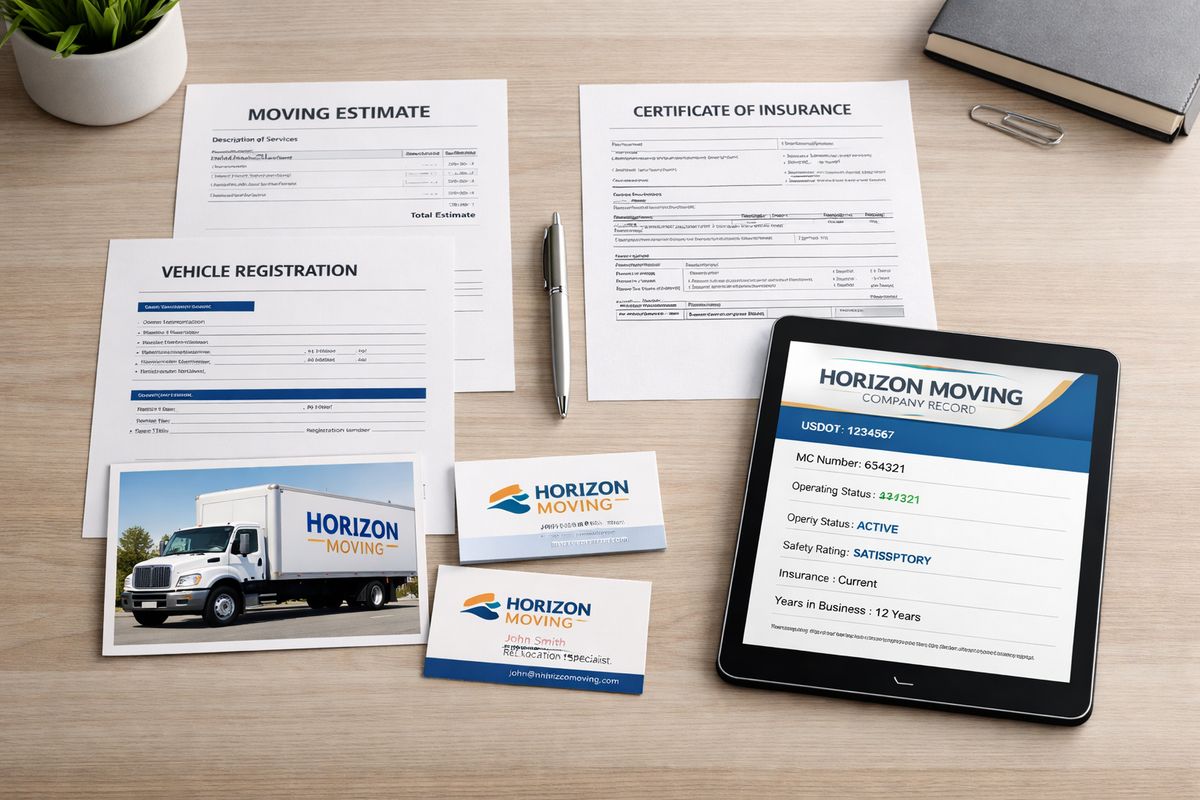
Now do the simple consistency check. The company name, phone number, address, website, estimate, truck branding, and contract should all line up. If the estimate says one business name, the truck shows another, and the payment request goes to a third, treat that like a flashing warning light.
This part is easy to skip because it feels small. It is not. Paperwork mismatches are one of the clearest signs that something is off.
“Insured” Does Not Mean Your Stuff Is Fully Covered
This is the part that trips people up most. A mover can be insured as a business and still leave you with very limited reimbursement for damaged belongings.
Liability insurance vs. cargo insurance vs. valuation coverage
Liability insurance usually covers harm the company causes in certain situations, such as bodily injury or property damage unrelated to the shipment itself. Cargo insurance may apply to goods being transported, but only under specific terms and limits.
Valuation coverage is different. It is the mover’s stated financial responsibility for your items if something is lost or damaged. That is the part you need to read carefully, because it affects what happens when your dresser arrives cracked or your television does not survive the trip.
Released Value Protection: the cheap option with a catch
Released Value Protection is often included at no added cost, which makes it sound fine until you see the math. Under federal rules, it pays only 60 cents per pound per item. So if a 50-pound TV is damaged, reimbursement could be just $15. That 60 cents per pound rule surprises people every year.
Cheap coverage is still cheap when you need it. That is the whole problem.
Full Value Protection: what it usually changes
Full Value Protection generally gives you better protection because the mover must repair the item, replace it with something similar, or pay compensation based on the agreed terms. It usually costs extra, but it is often the difference between feeling protected and realizing too late that you were not.
For interstate moves, movers must offer a choice between Released Value Protection and Full Value Protection. If you are comparing quotes, this should be part of the conversation just as much as labor and mileage. If the company gets vague here, the rest of the estimate deserves a second look.
What to Ask for Before You Say Yes
Once credentials check out, move to the paperwork. You want documents, not verbal reassurance.
A written estimate after a visual survey
A walk-through, video survey, or in-home estimate is usually far better than a rough phone quote. It catches the details that change pricing: stairs, elevator access, a long carry from the truck, tight hallways, disassembly needs, and specialty items tucked into a guest room.
For interstate moves, movers are generally required to provide written estimates based on a visual survey unless you waive that requirement in writing. If a company wants to quote your whole home in two minutes without seeing anything, that is not efficiency. That is a setup for surprises. If you want a better feel for how quotes should be compared line by line, this guide to reading moving quotes clearly helps.
The order for service, bill of lading, and fee breakdown
Before booking, ask for the order for service, the bill of lading, and a clear breakdown of charges. You want to see pickup and delivery windows, travel time, packing charges, storage fees, stairs, elevators, shuttle fees, cancellation terms, and claims procedures.
You may also hear the word tariff. In plain English, that is the mover’s rate and rules sheet. It explains how charges are calculated and when extra fees can apply. If a company cannot explain fees in normal language, that alone is a reason to slow down.
Deposit terms and payment timing
A modest deposit is one thing. A large upfront payment is another. If a mover wants a big deposit before delivery, especially in cash, that is a risk you do not need to take.
Good companies earn trust with paperwork, not pressure. In practice, transparent providers usually make payment timing clear from the start, especially for local moving services in Sarasota, where access fees, minimum hours, and labor details should all be spelled out early.
Red Flags That Are Easy to Miss
Bad moving experiences often come with clues. The trouble is that the clues can look harmless when you are busy.
The quote is much lower than the others
If one estimate comes in dramatically below the rest, assume there is a reason. Sometimes it is a stripped-down inventory. Sometimes it is a bait-and-switch price that grows once your belongings are on the truck.
A real estimate should reflect your actual move, not just win the booking. If you need help sorting out what drives pricing, it helps to understand why final moving costs change instead of chasing the cheapest number.
No physical address, vague paperwork, or pressure to book fast
A mover without a real business address, clear contract, or traceable company identity is like a used car seller with no title. Maybe nothing goes wrong. But if something does, you already know the paper trail is shaky.
Be wary of generic email accounts, blank sections in contracts, and “today only” discounts that magically expire at dinner time. Pressure is often a substitute for credibility.
Unmarked trucks, no inventory, or refusal to inspect your home
These details can show up right before moving day, which is why people ignore them. But unmarked trucks, missing inventory sheets, or refusal to inspect your home are not small things. A trustworthy mover should be willing to document what is being moved and explain how the price was built.
What Transparent Pricing Looks Like
Transparent pricing is not about finding the cheapest mover in Sarasota. It is about understanding exactly what you are paying for before the first box gets loaded.
What should be included in a local move quote
A local move quote should spell out hourly labor, truck fees, travel time, packing materials, heavy-item charges, stair fees, elevator issues, and minimum hours. If your condo in Lakewood Ranch needs a reserved elevator and a long walk from the loading area, that should not become a surprise on moving day.
Clear pricing lets you compare companies fairly. If one quote includes materials and another leaves them out, those quotes are not actually competing numbers.
What should be included in a long-distance move quote
Long-distance quotes often use weight or volume, plus mileage, delivery windows, fuel-related charges, storage, and valuation choices. Every added service should appear in writing. Not later. Not “if needed.” In writing.
That includes storage-in-transit, shuttle service, extra pickup stops, and packing help. If you are paying for boxes and labor, it helps to know when professional packing is worth adding and when it is not.
Questions to ask if the estimate feels fuzzy
If the estimate feels slippery, get direct. Ask whether it is binding or nonbinding. Ask what could change the total. Ask whether packing materials cost extra. Ask what happens if truck access is harder than expected.
Straight answers tend to sound straight. Evasive answers tend to stay evasive.
A Simple Pre-Booking Checklist You Can Use This Week
A good mover should be easy to verify and easy to understand. If booking feels confusing, that confusion is part of the decision.
Your 7-point check before booking
Use this quick list before saying yes:
- Confirm your move type
- Verify the right license
- Verify insurance and valuation options
- Get 2 to 3 written estimates
- Review all fees in writing
- Avoid large deposits
- Keep copies of every document
That list is simple on purpose. Most moving problems start where one of those seven steps gets skipped.
What to do if something does not add up
Pause the booking. Ask for clarification in writing. Verify the answer through the relevant agency. If the response stays slippery, move on.
You do not need to argue your way into trust. A reliable mover makes verification easy. This week, pick one company you are considering and verify the license and coverage before asking about price.
Frequently Asked Questions
How do you know if a moving company is really licensed and insured?
Check the actual registration numbers, not just the claim on the website. For interstate moves, verify the USDOT number through FMCSA. For in-state moves, check the state agency that regulates household goods movers. Then confirm the business name and address match the estimate and contract.
Are licensed and insured movers automatically responsible for full replacement of damaged items?
No. That is one of the biggest misunderstandings in moving. A licensed and insured mover may still offer only minimal default reimbursement unless you choose stronger valuation coverage.
What is the difference between insurance and valuation coverage?
Insurance usually refers to the mover’s business policies, such as liability or vehicle coverage. Valuation coverage is the mover’s declared responsibility for your belongings if something is lost or damaged during the move.
Should you pay a deposit to book movers?
A small deposit can be normal. A large upfront payment, especially cash demanded before delivery, is a red flag. Safer movers explain payment timing clearly and do not pressure you to pay big money just to hold a date.
Why is a visual estimate better than a phone quote?
A visual estimate gives the mover a chance to see stairs, elevators, bulky furniture, fragile items, and access problems before pricing the job. That makes surprise charges less likely and usually gives you a more accurate quote.
What if your building asks for a certificate of insurance?
Ask the mover for it early, not the day before your move. Many condos and apartment buildings want proof of coverage before allowing elevator reservations or move-in access, so it is smart to get that paperwork lined up well ahead of time.